

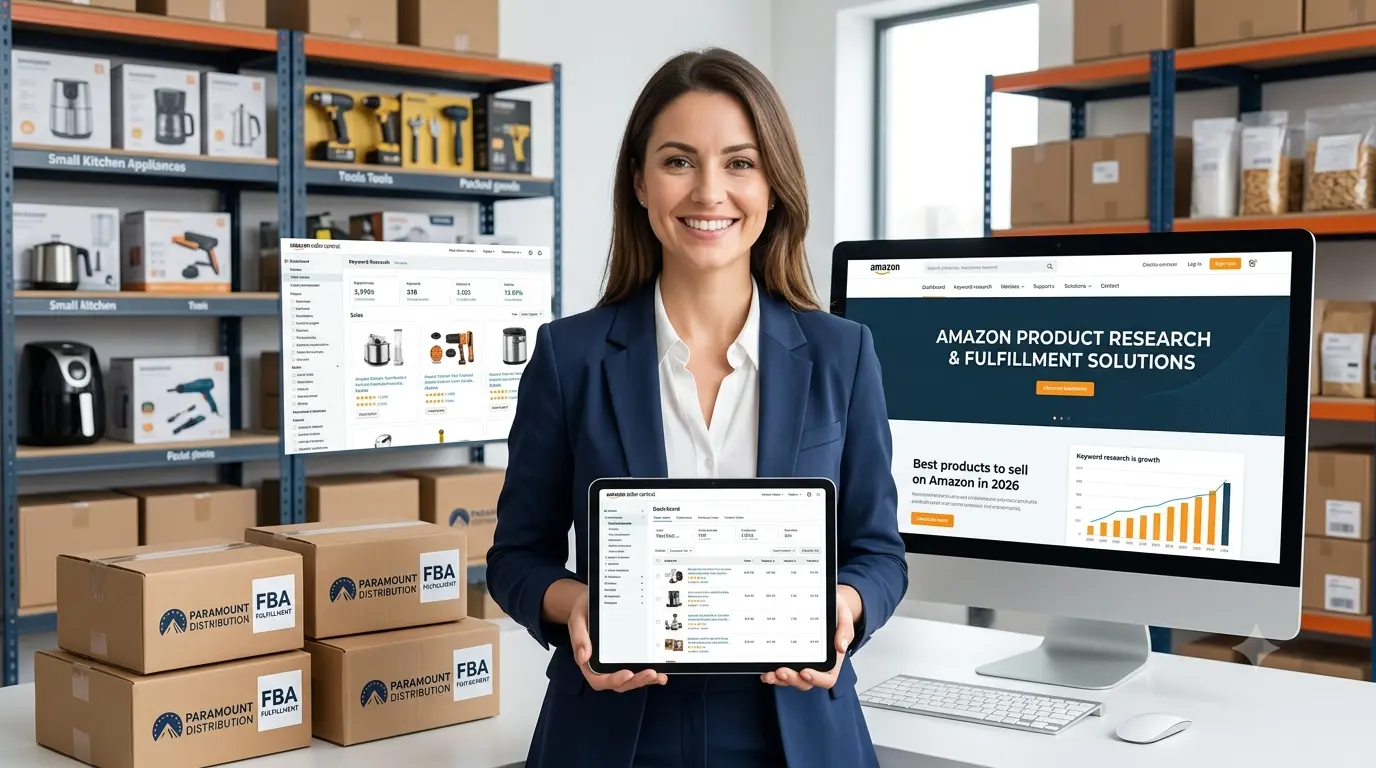
Entering the world of e-commerce can be an incredibly rewarding venture, yet the sheer volume of choices often overwhelms new sellers. If you are looking to build a sustainable, high-growth online business, identifying the best product to sell on Amazon is the most critical milestone on your roadmap. Navigating the highly competitive digital marketplace requires more than just intuition; it demands accurate data, robust sourcing infrastructure, and a strategic optimization plan.
Whether you operate out of North America, Europe, or the Asia-Pacific region, localized demand shifts and regional supply chains heavily influence your bottom line. Aligning your inventory choices with reliable wholesale logistics, such as the comprehensive distribution networks provided by Paramount Distribution, bridges the gap between raw market research and consistent, scalable profitability.
The Foundation of Amazon FBA Success
Succeeding on Amazon Fulfillment by Amazon (FBA) hinges on understanding consumer psychology and matching it with data analytics. Many aspiring merchants make the mistake of choosing products based purely on personal interest. While passion is helpful, empirical market validation ensures your business survives long-term.
Understanding Product Demand Dynamics
To uncover profitable opportunities, you must look for products that exhibit high search volume alongside manageable market competition. The goal is to isolate items experiencing a steady upwards trajectory or consistent year-round stability. Avoid highly seasonal fads unless you have a sophisticated cash-flow strategy to manage off-season overhead.
Evaluating Profit Margins and Fees
Before purchasing bulk inventory, you must calculate all associated overhead expenses. These include:
- Amazon Referral Fees: The percentage commission Amazon takes on each sale (typically 8% to 15%).
- FBA Fulfillment Fees: The cost to pick, pack, and ship your items based on size and weight tier.
- Storage Fees: Monthly charges for warehousing your inventory, which spike during the Q4 holiday season.
- Landed Sourcing Costs: The cost of buying the item from a distributor, including customs duties, freight, and domestic transport.
7 Data-Driven Strategies to Find the Best Product to Sell on Amazon
1. Analyze BSR (Best Sellers Rank) History
The Amazon Best Sellers Rank (BSR) is a clear indicator of how well an item is selling relative to others in its specific category. Monitoring an item’s BSR over a 90-day window reveals whether its sales volume is temporary or sustained. Look for target subcategories where the top ten sellers maintain a steady, low BSR number.

2. Target High-Volume, Low-Competition Niches
Finding an optimal product niche requires evaluating the average review counts of your direct competitors. If the first page of search results is dominated by listings with thousands of reviews, breaking into that specific subcategory will require a massive advertising budget. Aim for niches where multiple top-ranking listings have fewer than 150 reviews.
3. Leverage High-Value Wholesale Distribution Channels
Instead of dealing with foreign factories and lengthy lead times, successful sellers partner with reliable domestic distributors. Sourcing high-demand products through Paramount Distribution gives you immediate access to pre-vetted, brand-name consumer goods and high-margin wholesale lots. This minimizes your supply chain risk and guarantees authentic product origin.
4. Audit Customer Pain Points in Existing Reviews
One of the best ways to outcompete established sellers is to systematically read their 2-star and 3-star reviews. Look for recurring complaints regarding product defects, poor packaging, or missing components. By fixing these issues in your own manufacturing or bundling process, you instantly offer a superior choice.
5. Verify Dimensions and Weight Categorization
Shipping costs can easily eliminate your profits if you are not careful. The best product to sell on amazon is generally small, light, and durable. Sticking to items that fit comfortably inside a standard shoebox and weigh less than three pounds keeps your FBA fulfillment fees low and leaves more capital for digital marketing campaigns.
6. Utilize Automated Reverse ASIN Lookups
Reverse ASIN search tools allow you to input a competitor’s product identifier to discover the exact search terms driving their organic traffic. This competitive intelligence helps you pinpoint hidden search terms, high-conversion long-tail keywords, and emerging search trends that your competitors are actively bidding on.
7. Look for Bundling and Customization Opportunities
If a product category is saturated, consider creating a unique bundle to differentiate your offering. Grouping complementary products together increases the perceived value of your listing. This lets you win the Amazon Buy Box more frequently and command a premium price point over single-item competitors.
Essential Metrics for Product Research
When conducting your initial market validation, use the target parameters outlined below to qualify potential product ideas.
| Metric Component | Target Threshold | Rationale for Benchmark |
| Average Retail Selling Price | $20.00 – $75.00 | High enough to cover fees, low enough for impulse buying. |
| Monthly Sales Volume | Minimum 300 units per month | Ensures at least 10 daily sales to maintain healthy baseline momentum. |
| Average Competitor Reviews | Fewer than 200 reviews on page one | Indicates a market segment that is accessible for new listings. |
| Weight Limitations | Under 3.5 lbs (Standard Size Tier) | Lowers international freight costs and keeps FBA shipping expenses minimal. |
| Target Net Margin | 30% or greater after all expenses | Provides a buffer for Amazon PPC ad spend and promotional discounts. |
Sourcing Your Inventory with Paramount Distribution
Once you have identified the ideal category to target, securing a dependable supply chain is your next critical step. Working with an established logistics partner like Paramount Distribution simplifies the complexities of wholesale acquisition.
Lowering Minimum Order Quantities
Dealing directly with global manufacturers frequently requires massive upfront capital investments due to high minimum order constraints. Partnering with a domestic distributor allows you to purchase smaller, diversified product batches. This keeps your business nimble, protecting your cash flow while you test live consumer responses.
Ensuring Consistent Brand Authenticity
Amazon maintains strict policies regarding product authenticity and intellectual property rights. If a buyer flags an item as potentially counterfeit, you must provide verifiable invoices immediately. Sourcing your merchandise through legitimate wholesale distributors gives you clean, professional chain-of-custody documentation that protects your account from unexpected suspensions.
Optimizing Your Product Listing for Maximum Conversions
Finding the item is only half the battle; you must also optimize its digital presence so shoppers can find it easily.
Title and Bullets Strategy
Your primary keyword must reside within the first few words of your product title, followed by critical material attributes, sizes, and colors. Use the five bullet points to highlight immediate user benefits rather than dry technical specifications. Address common customer hesitations directly in the copy.
High-Quality Visual Content
Modern online shoppers buy with their eyes. Ensure your listing features high-resolution imagery shot against a pure white background, along with lifestyle photos showing the item in use. If your brand is registered on Amazon, utilize A+ Content sections to incorporate graphic comparison charts and deeper brand storytelling layouts.
Conclusion
The key to scaling a sustainable e-commerce business relies on balancing analytical product selection with a flawless supply chain. By focusing on lightweight, high-demand items and partnering with domestic wholesale networks like Paramount Distribution, sellers can effectively bypass complex international logistics risks while maintaining healthy profit margins.
Frequently Asked Questions (FAQs)
What is the absolute best product to sell on amazon for beginners?
The ideal starter items are lightweight, durable consumer goods priced between $20 and $50 that belong to open, ungated categories like Home & Kitchen, Patio & Garden, or Office Products.
How much capital do I need to start selling on Amazon?
While you can start with less, a budget of $2,000 to $5,000 is recommended. This covers your initial inventory order, product photography, shipping fees, and initial Amazon PPC advertising launch campaigns.
Can I source authentic wholesale products directly from domestic suppliers?
Yes, partnering with verified wholesale operations like Paramount Distribution gives you access to reliable inventory pipelines, safe brand licensing credentials, and domestic shipping logistics that bypass complex overseas customs processes.
Why is keyword density important for my Amazon listing description?
Maintaining an optimal keyword density ensures your listing indexes correctly within the Amazon A9 search engine algorithm without triggering spam penalties, making it easier for organic buyers to find your store page.