

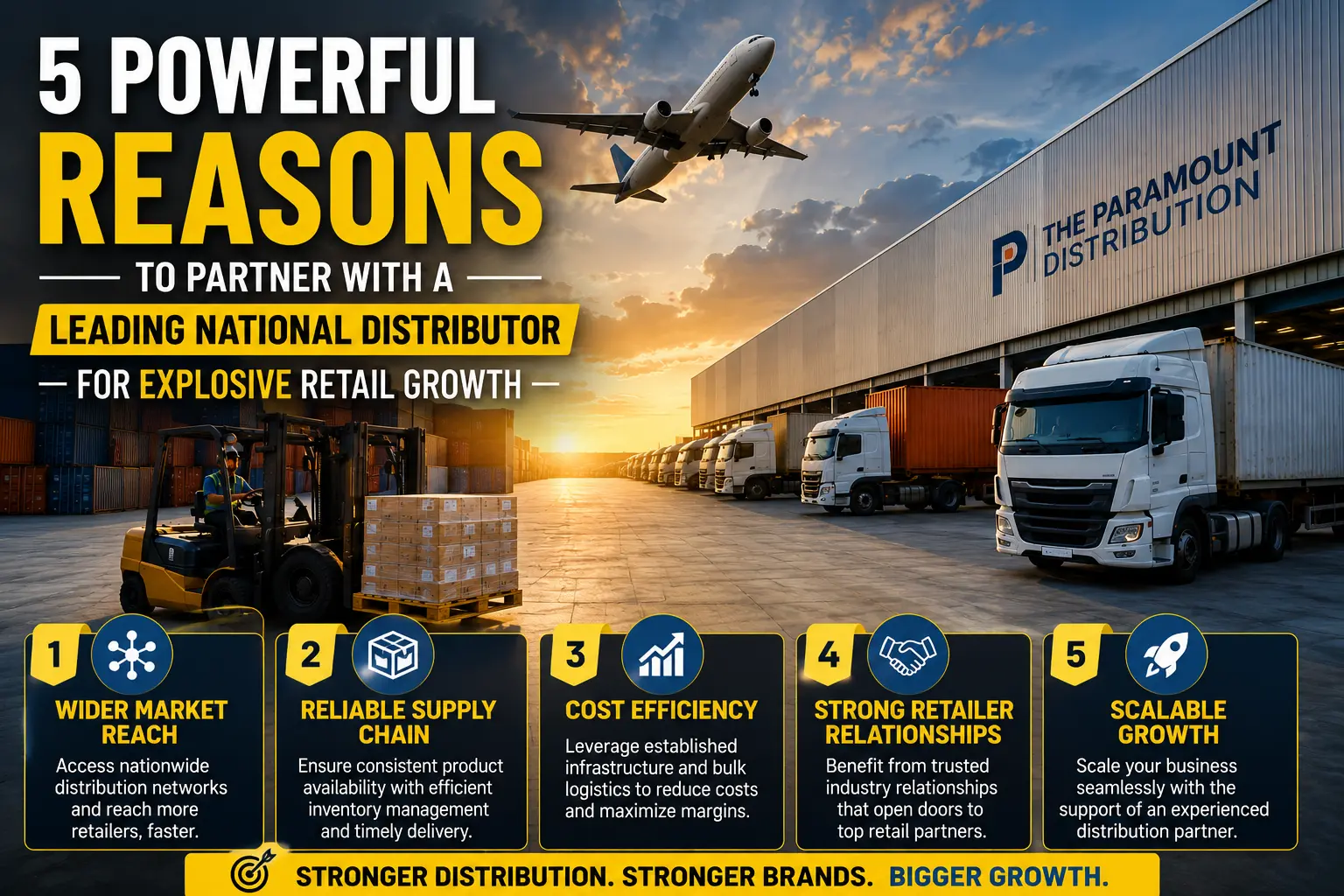
In an era defined by rapid market shifts, volatile consumer demands, and complex logistics, businesses face unprecedented pressure to deliver products efficiently. For manufacturers, brands, and e-commerce enterprises looking to scale, managing domestic logistics independently often leads to operational bottlenecks and ballooning costs. Securing a reliable infrastructure that bridges the gap between production and the end consumer is the single most critical factor for sustainable commercial growth.
To achieve nationwide market penetration without incurring prohibitive capital expenditures, enterprises must look toward specialized logistics architecture. Navigating this vast landscape requires deep industry expertise, localized warehousing networks, and robust freight systems. This is precisely where a strategic partnership with a premier national distributor becomes an invaluable operational asset.
What is a National Distributor?
A national distributor acts as the primary intermediary responsible for the large-scale warehousing, logistics, and commercial dissemination of goods across an entire country. Unlike regional wholesalers who operate within restricted geographic borders, nationwide distribution networks possess the logistical framework, capital, and technology required to manage supply chains spanning multiple territories, states, and time zones.
The Structural Framework of National Supply Chains
Modern enterprise supply chains rely on tiered logistics frameworks to balance inventory holding costs against delivery speeds. High-volume distribution networks function as centralized hubs that ingest massive bulk shipments directly from manufacturing plants or international ports of entry.
Once received, these goods are systematically organized, processed through warehouse management systems (WMS), and routed to regional fulfillment centers or directly to business-to-business (B2B) buying groups and retail outlets. This interconnected framework minimizes transport transit times and prevents fragmented inventory allocation.
How a National Distributor Transforms Wholesale Supply Chains
Collaborating with an established logistics partner radically simplifies multi-channel commerce. Instead of managing hundreds of individual accounts, shipping lanes, and retail compliance mandates, a manufacturer coordinates with a singular, centralized entity. This centralized model yields immediate improvements in operational efficiency.
Streamlining B2B Fulfillment Processes
- Consolidated Invoicing and Billing: Managing corporate accounts across diverse regions introduces significant administrative strain. Centralized distribution aggregates transactions, offering unified financial reporting and simplified billing workflows.
- Bulk Purchasing Power: Enterprise distribution partners buy inventory in large volumes. This injects predictable liquidity back into manufacturing setups, enabling smoother production cycles and better raw materials forecasting.
- Compliance and Vendor-Managed Inventory (VMI): Major big-box retail chains maintain incredibly strict routing guides and delivery windows. Expert fulfillment partners feature built-in compliance frameworks that mitigate the risk of costly chargebacks and delivery delays.
Strategic Advantages of Partnering with Paramount Distribution
For businesses seeking an optimized approach to large-scale product placement, Paramount Distribution delivers a highly scalable, end-to-end B2B infrastructure. By combining technology-driven logistics with deep market penetration, Paramount Distribution functions as an extension of your operational team, driving growth across highly competitive commercial landscapes.
Advanced Freight Infrastructure and Omnichannel Routing
Paramount Distribution coordinates vast freight networks utilizing less-than-truckload (LTL) and full-truckload (FTL) transit options. This flexible shipping model ensures that cargo moves swiftly through optimized freight lanes, significantly dropping per-unit shipping costs while boosting overall delivery predictability.
Integrating Real-Time Inventory Visibility
Modern B2B buyer behavior mirrors consumer expectations; accuracy and real-time visibility are non-negotiable. Paramount Distribution leverages cutting-edge electronic data interchange (EDI) systems to sync inventory tallies across retail portals, online marketplaces, and corporate accounts. This automated visibility prevents out-of-stock scenarios and allows brand managers to track velocity trends accurately.
Overcoming Supply Chain Vulnerabilities: Risk Mitigation Strategies
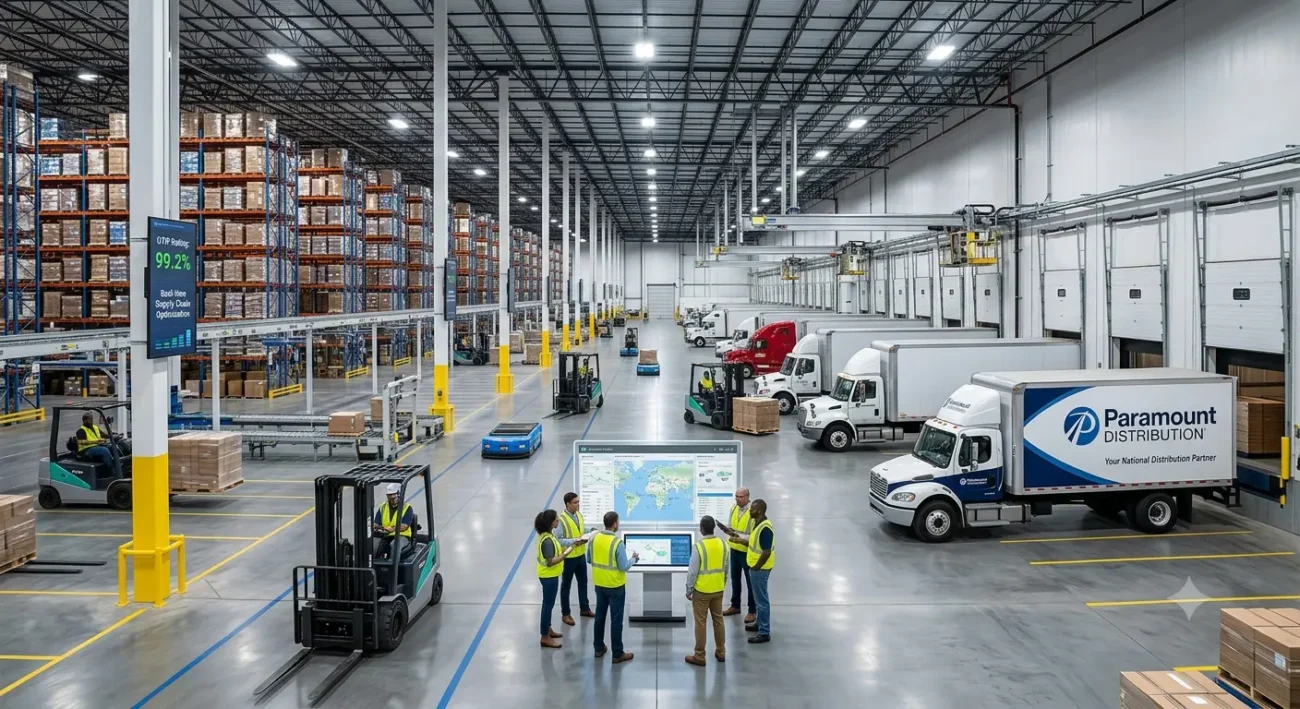
Global supply chains are inherently fragile, vulnerable to shifting economic policies, fuel cost spikes, and labor shortages. Entrusting your product pipeline to a robust national distributor acts as an insurance policy against unpredictable operational disruptions.
The Role of Cross-Docking in Modern Logistics
Cross-docking is an advanced logistical strategy where incoming products from a supplier are transferred directly to outbound transportation with little to no storage time in between.
| Operational Parameter | Traditional Warehousing Models | Advanced Cross-Docking Frameworks |
| Average Inventory Holding Time | 14 to 45 Days | Less than 24 Hours |
| Labor Overhead Costs | High (Picking, sorting, long-term slotting) | Low (Direct inbound-to-outbound staging) |
| Capital Tie-up in Stock | Substantial capital locked in physical safety stock | Highly liquid; rapid capital turnover rates |
| Risk of Product Obsolescence | Elevated for perishable or tech-sensitive goods | Minimalized due to immediate product velocity |
Diversified Carrier Networks and Strategic Asset Allocation
Relying on a single shipping carrier creates immediate vulnerability. If that carrier experiences a labor strike or capacity constraints, your entire business grinds to a halt. Leading nationwide logistics providers insulate partners from this risk by maintaining active agreements across a diversified portfolio of regional, national, and specialized freight carriers. If one lane becomes choked, traffic is dynamically rerouted through secondary channels instantly.
Key Operational Metrics for Evaluating Distribution Partners
Selecting the right commercial partner requires evaluating cold, hard performance data. To ensure your brand reputation remains protected, any potential distribution firm must consistently meet or exceed baseline industry standards across core key performance indicators (KPIs).
On-Time In-Full (OTIF) Delivery Ratings
The OTIF metric measures the percentage of shipments delivered within the exact window requested by the buyer, containing the exact quantities ordered. Top-tier logistics organizations consistently maintain an OTIF rating above 98%. Falling below this threshold indicates foundational weaknesses in picking accuracy or dispatch routing.
Inventory Turnover and Days Sales of Inventory (DSI)
Efficient supply chains prioritize movement over storage. A high inventory turnover ratio proves that goods move out of distribution hubs quickly, reducing warehouse overhead costs and keeping stock fresh. Brand managers must closely monitor DSI metrics to pinpoint slow-moving product variations before they become financial liabilities.
Geographic Optimization: Reaching Regional Markets Efficiently
The ultimate value of a national distributor lies in geographic optimization. By strategically positioning fulfillment hubs near major transportation corridors and population dense sectors, transit distances drop precipitously. This geographic proximity drastically cuts down the time-to-market for new product rollouts, keeping your brand agile, responsive, and highly competitive.
Conclusion
Partnering with an elite nationwide fulfillment provider is the ultimate catalyst for brands looking to transcend regional limitations and achieve long-term market dominance. By leveraging the advanced infrastructure, strategic cross-docking models, and automated compliance frameworks of Paramount Distribution, your business can systematically eliminate costly supply chain bottlenecks and minimize overhead liabilities.
In a hyper-competitive commercial environment where execution speed and order accuracy define brand reputation, securing a resilient distribution infrastructure is no longer just an operational choice—it is a foundational pillar for explosive retail growth.
Frequently Asked Questions (FAQs)
What is the primary difference between a broker and a national distributor?
A broker functions purely as a sales agent who facilitates transactions between a manufacturer and a buyer for a commission; they never take physical possession or legal ownership of the inventory. Conversely, a national distributor purchases the inventory wholesale, manages the physical warehousing, handles all freight logistics, and assumes the financial risk of selling the products to downstream retail networks.
How does Paramount Distribution handle specialized retail routing compliance?
Paramount Distribution utilizes fully integrated EDI protocols and automated compliance checking software that cross-references orders with individual retail routing guides. This ensures every shipment matches exact pallet dimensions, labeling requirements, and delivery windows mandated by corporate buyers.
Why is cross-docking preferred for high-velocity goods?
Cross-docking eliminates the time and labor spent moving products into long-term warehouse storage and then picking them out again later. By transferring inbound items straight to outbound delivery vehicles, companies significantly reduce handling costs, accelerate delivery speeds, and optimize warehouse floor space.