

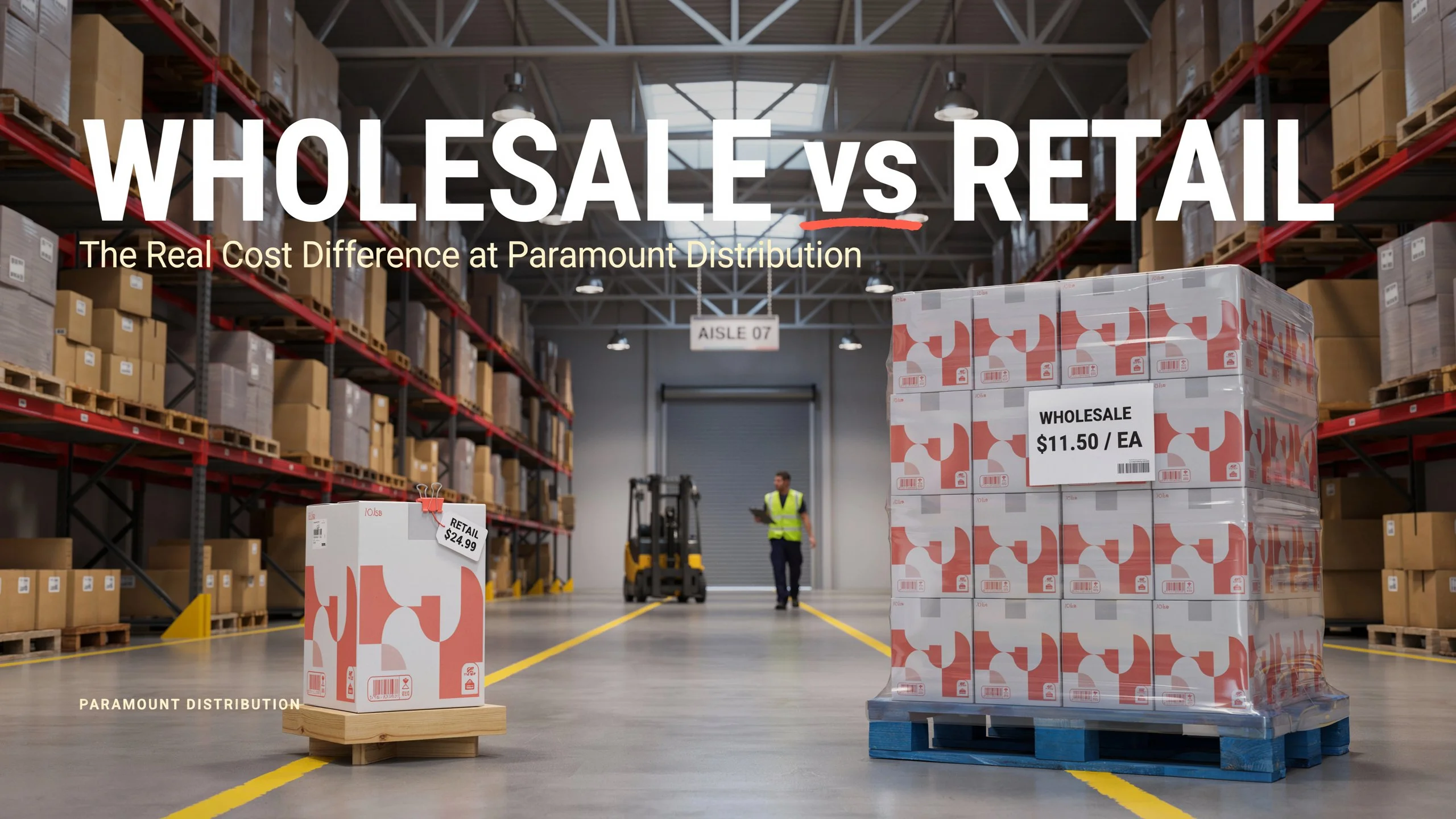
You’ve probably seen the word “wholesale” thrown around in product listings, supplier directories, and business forums. And you’ve definitely paid retail prices your whole life without thinking twice. But the moment you’re running a business — or trying to cut costs as a buyer — the gap between these two pricing models starts to matter a lot.
This guide breaks down how wholesale and retail pricing actually work, why the difference exists, and how to decide which model makes sense for your situation.
What Is Retail Pricing?
Retail pricing is what consumers pay at the point of sale. Whether you’re buying a pair of sneakers at a shoe store, ordering from an e-commerce site, or picking up groceries at a supermarket, you’re paying the retail price.
This price includes:
- The original cost of the product (what the seller paid to acquire it)
- Overhead expenses: rent, utilities, staff wages, technology
- Marketing and advertising costs
- The seller’s profit margin
Retailers typically mark up products anywhere from 20% to 100% over their acquisition cost, depending on the industry. Luxury goods and specialty products often carry even higher markups. Fast-moving consumer goods with high volume and thin margins, like basic grocery staples, tend to sit on the lower end.
The retail price is designed for individual buyers purchasing in small quantities — usually one unit at a time.
What Is Wholesale Pricing?
Wholesale pricing is what businesses pay when they buy products in bulk directly from a manufacturer, distributor, or supplier. The buyer isn’t the end consumer — they’re purchasing inventory to resell.
Because of the volume involved, suppliers offer a significantly lower per-unit price. A clothing manufacturer might sell a t-shirt to a retailer for $8 wholesale. That retailer then sells it to consumers for $25 retail. The spread between those two numbers is the retailer’s gross margin.
Wholesale transactions typically involve:
- Minimum order quantities (MOQs) — you often can’t buy just one unit
- Business-to-business (B2B) agreements or accounts
- Invoices with net payment terms (e.g., Net 30, Net 60)
- Less packaging and fewer consumer-facing extras
- Bulk shipping, often by pallet or freight
Wholesale buyers are typically retailers, resellers, distributors, restaurants, or any business that incorporates purchased goods into its own operations or product offerings.
Wholesale vs Retail Pricing: A Direct Comparison
|
Factor |
Wholesale Price |
Retail Price |
|
Who pays it |
Businesses, resellers |
End consumers |
|
Purchase volume |
Bulk (high MOQ) |
Single units or small quantities |
|
Price per unit |
Lower |
Higher |
|
Relationship type |
B2B |
B2C |
|
Payment terms |
Often Net 30/60/90 |
Immediate (cash, card) |
|
Packaging |
Minimal / bulk |
Consumer-ready |
|
Availability |
Requires account/approval |
Open to public |
|
Profit intent |
Buyer plans to resell |
Buyer uses the product |
How the Pricing Gap Is Calculated
The percentage difference between wholesale and retail price has a name: the markup (from the seller’s perspective) or the margin (from the retailer’s perspective). These aren’t interchangeable, and confusing them is a common business mistake.
Same product, very different-sounding numbers. Knowing which metric your industry uses as a benchmark matters — especially when comparing performance against competitors or negotiating with suppliers.
Why Do Suppliers Offer Lower Wholesale Prices?
It comes down to economics. When a supplier sells to a retailer buying 500 units, the transaction is simpler, cheaper, and lower-risk than selling 500 individual orders to 500 separate customers.
Specifically, bulk buyers reduce:
- Customer acquisition costs — one client relationship instead of hundreds
- Shipping and fulfillment complexity — one large shipment vs. many small ones
- Payment processing overhead — fewer transactions, often with predictable payment terms
- Returns and customer service burden — business buyers tend to have clearer expectations
The supplier sacrifices per-unit margin in exchange for predictable volume, lower operating costs, and long-term buyer relationships. For manufacturers especially, filling large wholesale orders at lower margins can be more profitable in total than chasing retail customers.
Real-World Examples Across Industries
Consumer Goods (FMCG) & Trending Collectibles
Fast-moving consumer goods and trending collectibles are where the wholesale-retail gap is most visible. A dedicated B2B supplier like The Paramount Distribution sits between manufacturers and retailers — buying consumer goods in bulk at wholesale prices and supplying them to stores, e-commerce stores, and resellers.
Whether it’s everyday items or high-demand viral products like the Sonny Angel Sweets Mini Figure , buying wholesale ensures retailers get genuine products at prices that protect their margins.
Clothing & Apparel
Nike sells products to third-party retailers at wholesale prices that are typically 40–50% below the retail price consumers see on shelves. The retailer marks those up to cover their own costs. Nike also operates its own retail stores and DTC (direct-to-consumer) channels — meaning the same company operates in both wholesale and retail markets simultaneously.
Food & Beverage
A coffee roaster might sell a 5 lb bag of specialty coffee to a café for $30 wholesale. That same coffee, sold to consumers in 12 oz retail bags, might price at $22–$28 per bag — effectively $90+ per 5 lbs in retail-equivalent weight. The café benefits from the lower cost because they’re buying volume and serving the coffee by the cup.
Electronics
A component manufacturer sells circuit boards to an OEM (original equipment manufacturer) at wholesale. The OEM builds those components into a finished product and sells at retail to consumers. Each step adds value — and markup.
Health & Beauty
Brands like ELF Cosmetics built their business partly on ultra-thin retail margins by keeping wholesale costs low through high-volume manufacturing. Competitors with higher wholesale costs have to charge more at retail to maintain their own margins.
The Rise of Direct-to-Consumer (DTC) Pricing
Traditional supply chains look like this:
Each link adds a markup. By the time a product reaches a shelf, it might have passed through two or three layers of margin-taking.
DTC brands skip those middle layers. Brands like Warby Parker (eyewear), Casper (mattresses), and Allbirds (footwear) sell directly to consumers at prices lower than traditional retail would allow — because they’re capturing the margin that would otherwise go to a retailer.
This creates an interesting pricing dynamic: DTC prices often sit between wholesale and traditional retail. The brand earns more per unit than they would through a wholesale arrangement, and the consumer pays less than they would at a brick-and-mortar retailer.
Wholesale Pricing Strategies Suppliers Use
Not all wholesale pricing is set the same way. Suppliers use different models depending on their business goals:
- Tiered Pricing: The more you buy, the lower your per-unit cost (e.g., 1–99 units: $12 each | 100–499 units: $10 each | 500+ units: $8 each).
- Cost-Plus Pricing: The supplier calculates their total cost to produce or acquire the product and adds a fixed profit margin.
- Value-Based Wholesale Pricing: The supplier sets wholesale prices based on what the market will bear — particularly relevant for branded or proprietary products.
- MAP (Minimum Advertised Price) Policies: Many brands enforce a MAP policy where retailers can buy at wholesale, but can’t advertise the product below a set price to protect brand equity.
Retail Pricing Strategies
On the retail side, common pricing approaches include:
- Keystone Pricing: Simply doubling the wholesale cost.
- Competitive Pricing: Setting prices based on competitor rates rather than internal costs.
- Psychological Pricing: Pricing items at $19.99 instead of $20.00 to make them feel significantly lower.
- Loss Leaders: Pricing select items below cost to drive store foot traffic.
- Dynamic Pricing: Prices that adjust algorithmically based on real-time demand (common with airlines and Amazon).
Who Should Buy at Wholesale?
Wholesale buying makes sense if you meet one or more of these criteria:
- You plan to resell the product online or in a physical store.
- You use large quantities in your daily business operations.
- You can meet minimum order requirements without hurting cash flow.
- You have dedicated storage space for bulk inventory.
- You possess a registered business license or reseller certificate.
Common Mistakes Businesses Make with Wholesale and Retail Pricing
- Confusing Markup with Margin: Leads to underpricing products and losing money at scale.
- Ignoring Total Cost of Ownership: Shipping, storage, insurance, and inventory carrying costs add 10–25% beyond invoice price.
- Buying More Than You Can Sell: Cash tied up in slow-moving stock creates severe liquidity issues.
- Not Negotiating: Payment terms, freight costs, and per-unit prices are often negotiable as volume grows.
Ready to Scale Your Business with Wholesale Pricing?
Whether you are an e-commerce seller, local retail shop, or boutique owner, sourcing inventory at true wholesale prices is the fastest way to boost your gross margins.
At The Paramount Distribution, we specialize in providing authentic, high-demand products with flexible wholesale terms, reliable fulfillment, and competitive bulk rates.
- Browse Wholesale Inventory: View our full collection at The Paramount Distribution.
- Featured Product: Stock up on authentic Sonny Angel Sweets Mini Figures today!
- Get a Custom Quote: Contact our team directly to open your business account.
Frequently Asked Questions (FAQ)
Q: Can anyone buy at wholesale prices?
Most wholesale suppliers require buyers to have a registered business and a reseller’s certificate. While warehouse clubs offer bulk retail pricing to individual members, true B2B wholesale requires proof of business.
Q: What’s a typical wholesale-to-retail markup?
A common benchmark is 2x (keystone markup), meaning retail is double the wholesale cost. In practice, markups range from 20% in electronics to 200%+ in high-margin categories like cosmetics or jewelry.
Q: What is the difference between a distributor and a wholesaler?
A distributor typically holds an exclusive or semi-exclusive agreement with a manufacturer to manage logistics and sales support. A wholesaler simply buys finished goods and resells them to retailers without an exclusive contract.
Q: What are net payment terms in wholesale?
Net terms define when payment is due after an invoice is issued. “Net 30” means payment is due within 30 days. Some suppliers offer discounts like “2/10 Net 30” (2% discount if paid within 10 days).